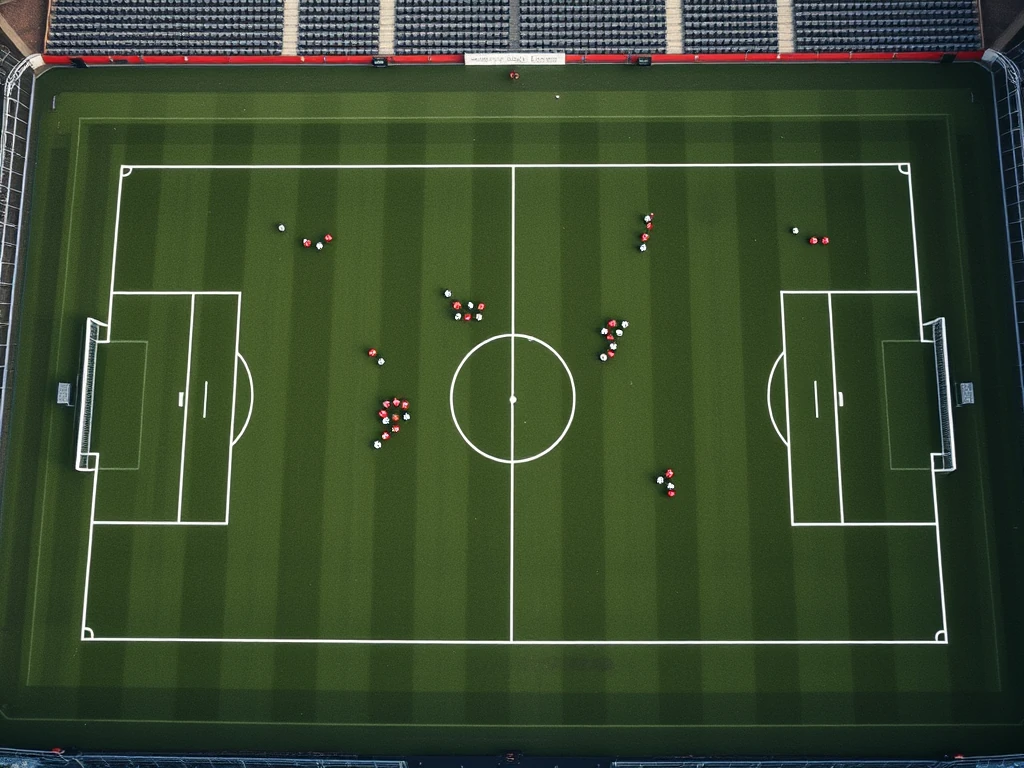

"Three clean sheets in a row reveals much about Queen's Park's tactical evolution this season," remarked the coaching staff after their latest match. As fans anticipate each game, the tactical decisions that have shaped the team's strategy cannot be understated. In their last five fixtures, Queen's Park has exhibited flexibility in formation, oscillating between 4-2-3-1 and 3-5-2 setups.
One key aspect of their game has been the transition between defensive resilience and attacking prowess. For instance, against Dunfermline, the Spiders deployed a compact midfield, stifling opponent attacks and then quickly transitioning to exploit the wings. This strategy not only soundly frustrated their rivals but also created immediate goal-scoring opportunities.
Analyzing the tactical adjustments: Queen's Park's adaptability is evident in their player movements and positioning. Here's a quick overview of their recent stats:
| Match | Formation | Goals | Clean Sheets |
|---|---|---|---|
| Ayr United | 4-2-3-1 | 1 | 1 |
| Dunfermline | 3-5-2 | 2 | 1 |
| Partick Thistle | 4-2-3-1 | 0 | 1 |
| Morton | 3-5-2 | 2 | 0 |
| Arbroath | 4-2-3-1 | 0 | 1 |
The introduction of C. Goldie in midfield has played a significant role in this tactical shift. His ability to win duels and distribute the ball quickly has galvanized the team's forward thrust. When Goldie moves in tandem with players like J. Bradley and A. Connolly, they create dynamic opportunities that keep opposing defenses on their toes.
As the season progresses, the tactical nous of the coaching staff and the adaptability of players will largely determine Queen's Park's success in the Scottish Championship. Fans can expect more exciting football as they continue to evolve their style of play.